
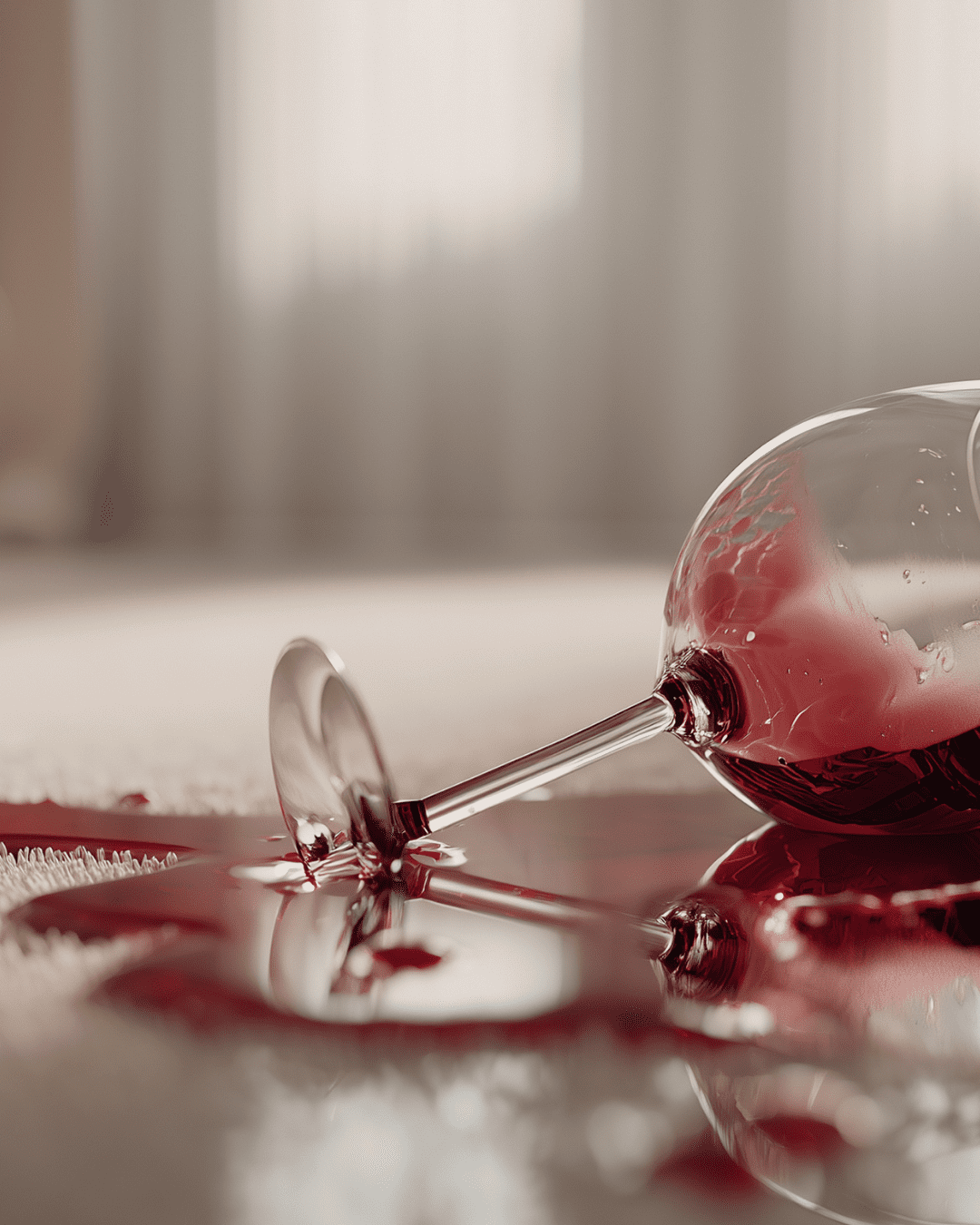

How to Remove Red Wine From Carpet: A Complete Stain Removal Guide
Quick answer: Act within the first 60 seconds. Blot, don't rub, with a clean white cloth to absorb as much wine as possible, then apply a solution of 1 teaspoon clear dishwashing liquid and 500ml cold water. Blot from the outside of the stain inward, rinse with cold water, and weight a dry towel on top for several hours. Never use hot water, salt, or white wine, all common advice that either doesn't work or makes the stain worse. If the stain has dried or the carpet is wool, Persian, or Oriental, call a professional before attempting anything.
Red wine is one of the most feared carpet stains for good reason, the natural tannins and anthocyanin pigments bond quickly with carpet fibres, and the wrong response makes it permanent. The good news is that with fast, correct action, most fresh red wine stains come out completely. Here's exactly what to do.
Step 1: Stop the Spread
As soon as wine hits the carpet:
Grab a clean, white, absorbent cloth or a stack of paper towels. Coloured cloths can transfer their own dye into the wet area.
Place the cloth directly on the spill and press down firmly.
Do not wipe, rub, or scrub. Rubbing spreads the stain outward and pushes the wine deeper into the carpet backing.
Step 2: Blot, Lift, Repeat
Press straight down with your palm or fist for a few seconds.
Lift the cloth, fold to a clean section, and press again.
Keep repeating until almost no colour transfers to the cloth.
If the spill is large, switch to fresh paper towels frequently, a saturated cloth just redistributes wine.
Step 3: Work From the Outside In
When you apply any cleaning solution, always work from the outer edge of the stain toward the centre. This prevents the stain from spreading into a larger ring.
The Wool-Safe Cleaning Solution That Actually Works
Skip the supermarket aisle. Most commercial carpet stain removers are too alkaline for natural fibres and leave sticky residue that attracts dirt. This simple mix is safer, cheaper, and works on most carpet types:
DIY red wine stain remover:
1 teaspoon clear, fragrance-free dishwashing liquid (not coloured, not "antibacterial")
1 teaspoon white vinegar
500ml cold water
Mix in a spray bottle. Mist lightly onto the stained area, never saturate the carpet. Blot with a white cloth. Mist with plain cold water to rinse. Blot again. Place a dry towel on top with a heavy book and leave for several hours.
2. Rotate Every Six Months
Rotate your rug 180 degrees twice a year. This evens out the wear pattern from foot traffic and prevents the sunlit side from fading faster than the shaded side. In Johannesburg homes with strong afternoon light, this is especially important, sun damage to wool dyes is permanent and cannot be cleaned out.
Dampen a white cloth with the cleaning solution.
Press it against a hidden area of carpet (under furniture, inside a wardrobe) for 30 seconds.
Check the cloth for any colour transfer.
If colour transfers, stop. The dyes are unstable and any wet cleaning will cause bleeding. Call a professional immediately.
What Not to Do (Classic Red Wine Mistakes)
Most "emergency wine stain" advice online is wrong, outdated, or only works on synthetic carpets in very specific conditions. Here's what to avoid:
Don't Use White Wine
The internet myth that "white wine neutralises red wine" is wrong. All you're doing is adding more liquid, more sugar, and another set of tannins to the stain. Plain cold water is more effective.
Don't Use Salt (Unless You're Willing to Replace the Carpet)
Salt does absorb some liquid, but on wool or natural fibres it also:
Draws the wine deeper into the backing as it absorbs.
Leaves a crystalline residue that's extremely difficult to fully remove.
Can set the stain permanently if left too long.
If you have absolutely nothing else available and the spill is on synthetic carpet, a quick salt application for 2–3 minutes followed by thorough vacuuming can help — but it's a last resort, not a first choice.
Don't Use Hot or Warm Water
Heat permanently sets tannin and protein stains. Red wine contains both. Only use cold water for every step of the cleaning process. This applies to rinsing too.
Don't Use Soda Water (On Most Carpets)
Soda water is often recommended, and on synthetic carpet it can help with dilution. But on wool or natural fibres, the carbonation does nothing useful, and the mineral content can leave a faint mark where it dries. Plain cold water works better.
Don't Use Bleach, Hydrogen Peroxide, or Ammonia
These will chemically damage natural fibres permanently. Bleach literally dissolves wool. Peroxide strips dye. Ammonia is too alkaline and causes yellowing. Even on synthetic carpet, these products can cause colour loss that's worse than the original stain.
Don't Rent a Carpet Cleaning Machine for a Single Stain
Rental machines use too much water and alkaline detergent. For a single wine stain, they'll over-wet the backing and often leave a larger "ring" mark around the original spill. Stick to blotting and spot treatment, or call a professional.
What to Do If the Wine Has Dried
Dried red wine is harder but not always impossible.
Rehydrate first. Mist plain cold water onto the stain and let it sit for 5 minutes to soften the tannins.
Blot thoroughly with a white cloth.
Apply the dish soap and vinegar solution as above.
Blot from the outside in.
If the stain is more than 24 hours old, or you see a visible ring remaining after one careful attempt, stop. Further DIY will almost certainly make it worse. Dried tannin stains are one of the most common reasons customers book our professional cleaning service, our advanced extraction methods can often lift stains that look permanent.
Red Wine on Different Carpet Types
Synthetic Carpet (Nylon, Polyester, Polypropylene):
These fibres are the most forgiving. The dish soap and vinegar solution works well. Most fresh spills come out completely.
Wool Carpet:
Wool's natural lanolin coating gives you a short window of protection, use it. Act fast, use only cold water, and never use alkaline products. If the stain doesn't come out with one careful application, call a Woolsafe-certified professional rather than escalating. For a full guide to cleaning wool, read our wool carpet care article.
Persian or Oriental Rugs:
These require extra caution. Dye bleed is a real risk, especially on older pieces. Blot the wine out gently, then stop, do not apply any cleaning solution without testing for colourfastness first. Persian rugs are valuable investments, and a single wrong product can cause permanent damage. See our full guide on cleaning Persian and Oriental rugs for complete safety instructions.
Sisal, Jute, and Natural Plant Fibres:
These carpets should never get wet. They'll stain, shrink, and watermark from any moisture. Blot the wine out with as little pressure and contact as possible, then call a professional. Do not apply any cleaning solution.
How to Handle Red Wine on Upholstery
The same principles apply, blot, don't rub; work outside in; use the dish soap and vinegar solution on colourfast fabrics. But upholstery is harder because you can't always see how deep the stain has penetrated into the padding.
If the spill is on a lounge suite, armchair, or dining chair: Blot as much liquid as possible from the surface.
Check the care label (usually under a cushion) for the cleaning code:
W:
water-based cleaning is safe
S:
solvent only, no water
WS:
either is safe
X:
professional cleaning only
Only use the DIY solution on W or WS coded fabrics. Never use water on S or X fabrics.
If the stain has soaked through to the padding, professional cleaning is the only real solution, residual wine in the foam will re-emerge as a brown mark over time.
Our upholstery cleaning service treats both the fabric surface and padding with pet-safe, low-moisture methods specifically designed to extract embedded stains.
Why Professional Cleaning Works Where DIY Fails
There are three reasons a red wine stain survives DIY cleaning:
1. The tannin has bonded with the fibre. Home solutions can weaken this bond but rarely break it completely.
2. Residue remains in the backing. Even when the surface looks clean, wine soaked into the underlay or carpet backing will slowly wick back up as a brown ring over the following weeks.
3. Wrong products were used. Alkaline cleaners, bleach, or heat have set the stain permanently.
Professional cleaning addresses all three. At The Carpet Guys, our low-moisture 7-step process uses specialised pre-treatments that break tannin bonds, combined with extraction methods that pull residue out of the backing, not just off the surface. This is why stains that "keep coming back" after DIY often vanish completely after a professional treatment.
Our technicians are certified through The Carpet Guys Academy and the Woolsafe Organisation, which means we use wool-safe and Persian-safe methods on natural fibres and tougher extraction on synthetics. Every clean includes stain treatment, urine treatment, odour treatment, allergen treatment, and rejuvenation treatment, see our transparent price list for full details.
When to Call a Professional
The stain is on wool, Persian, Oriental, silk, sisal, or jute.
The stain is larger than a coaster.
The wine has been sitting for more than an hour.
You've already tried one DIY attempt and the stain is still visible.
You see a ring forming around the cleaned area.
The carpet smells musty after cleaning (indicating over-wetting).
The colour has shifted or faded in the cleaned area.
The sooner a professional sees the stain, the higher the success rate. Waiting weeks or months reduces the chance of complete removal.
Prevention: Protecting Your Carpet Going Forward
A few simple habits dramatically reduce the risk of permanent wine damage:
Keep a small spill kit handy - a bottle of plain cold water, a stack of white cloths, and a spray bottle of the dish soap solution in a kitchen cupboard means you can respond in seconds.
Apply carpet protector after professional cleaning - modern fibre protectors give you several extra minutes before a spill penetrates.
Use darker carpets in high-risk rooms - dining rooms, entertainment areas, and lounges benefit from patterned or deeper-coloured carpet where faint residual marks are less visible.
Have carpets professionally cleaned every 12–18 months - embedded soil makes every stain harder to remove. Clean fibres release stains more readily.
Frequently Asked Questions
Does club soda really remove red wine?
On synthetic carpet, club soda can help with dilution if used immediately, but plain cold water works just as well. On wool or natural fibres, club soda is not recommended because the minerals can leave faint marks.
Can a professional remove an old red wine stain?
Often, yes, especially if the stain is on synthetic carpet and no harsh chemicals have been used on it. Success rates drop significantly when DIY attempts with bleach, peroxide, or hot water have set the stain. Call as soon as possible for the best chance of full removal.
Is red wine worse than white wine on carpet?
Red wine is much harder to remove because of its anthocyanin pigments (the purple/red compounds in grape skins). White wine contains tannins but no strong pigment, so it's usually invisible once dry, though residue can still cause long-term yellowing if not cleaned.
Will baking soda remove red wine?
Baking soda (bicarbonate of soda) can help absorb liquid if applied immediately after blotting, and works as an odour absorber. But on wool it should never be used wet or combined with vinegar, the reaction creates an alkaline environment that damages wool fibres. Use it as a dry follow-up after blotting only, and vacuum thoroughly.
Do you service red wine stains in Johannesburg?
Yes. The Carpet Guys service the whole of Gauteng. Every carpet clean includes stain treatment, urine treatment, odour treatment, allergen treatment, and rejuvenation treatment at no extra charge, see our price list for full details, or book a clean here. For urgent stains, contact us directly.
The short version:
Blot immediately with a white cloth. Use 1 teaspoon dish soap plus 1 teaspoon white vinegar in 500ml cold water. Work outside in. Never use heat, salt, bleach, or white wine. Test on a hidden area first if the carpet is wool or Persian. If the stain doesn't come out in one careful attempt, stop and call a professional, further DIY will almost always make things worse.