
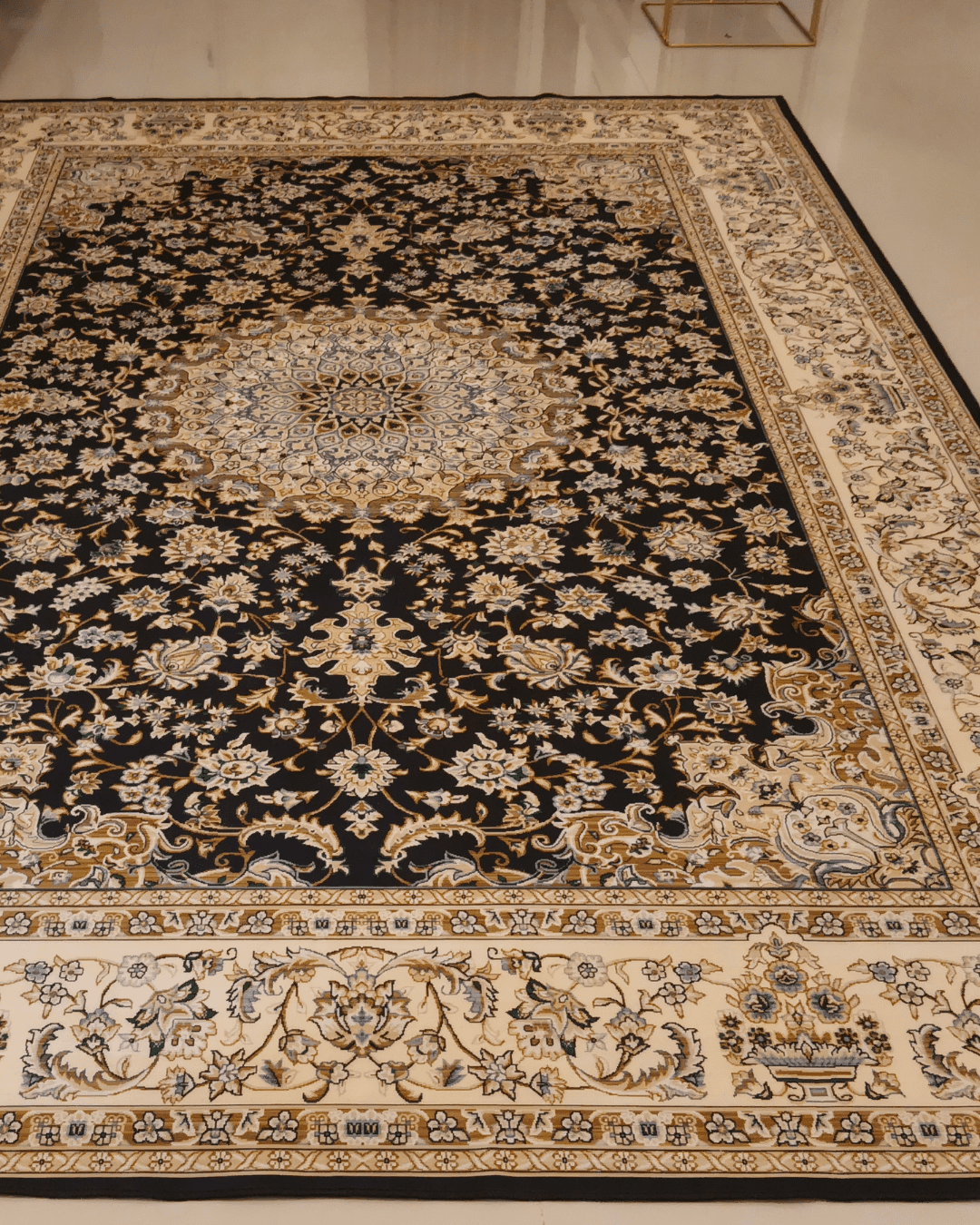

How to Clean a Persian or Oriental Rug at Home: A Safety Guide
Quick answer: You can safely vacuum, blot fresh spills, and dust a Persian or Oriental rug at home, but you should never steam clean it, shampoo it, or use supermarket carpet cleaners on it. These rugs are made from natural wool, silk, or cotton with vegetable or chrome dyes, and the wrong method can cause permanent dye bleed, foundation rot, or fringe damage that costs more to repair than a professional clean would have cost in the first place.
professional clean would have cost in the first place.
If you own a hand-knotted Persian, Afghan, Turkish, or other Oriental rug, this guide will show you exactly what you can do safely at home and what you should never attempt without a Woolsafe-certified professional rug cleaner.
Why Persian and Oriental Rugs Need Different Care
Unlike machine-made synthetic rugs, Persian and Oriental rugs are typically:
Hand-knotted from natural fibres - usually wool, sometimes silk, with cotton or wool foundations.
Dyed with sensitive colourants - many use traditional vegetable dyes or older chrome dyes that bleed easily when exposed to the wrong pH or too much water.
Constructed without adhesives - the structural integrity depends on the foundation staying dry and intact.
Extremely valuable - even a modest hand-knotted Persian rug can be worth R15,000 to R80,000 or more, with larger antique pieces reaching well into six figures.
This combination means a rug that looks similar to a regular carpet actually behaves completely differently when it gets wet. Water-soluble dyes migrate. Cotton foundations rot. Fringes, which are the structural ends of the warp threads, unravel if handled incorrectly.
What You Can Safely Do at Home
1. Vacuum Regularly (With the Beater Bar Off)
Vacuum your Persian rug at least once a week, more often in high-traffic areas.
The critical rule: turn off the rotating beater bar or use suction-only mode. The beater bar is designed for synthetic pile and will pull loose knots, fray fringes, and accelerate wear on natural fibres.
Vacuum in the direction of the pile (run your hand across it to feel which way it lies smoothest). Never vacuum over the fringes, use the hose attachment around them instead, or lift them out of the way.
2. Rotate Every Six Months
Rotate your rug 180 degrees twice a year. This evens out the wear pattern from foot traffic and prevents the sunlit side from fading faster than the shaded side. In Johannesburg homes with strong afternoon light, this is especially important, sun damage to wool dyes is permanent and cannot be cleaned out.
3. Shake or Beat Out Dry Soil (Small Rugs Only)
For rugs small enough to handle, roughly under 2m x 3m, take them outside once a month, drape them over a sturdy railing or washing line, and gently beat the back with a broom or rug beater. You'll be shocked at how much fine dust comes out. This dry soil is abrasive and acts like sandpaper between the knots, so removing it regularly extends the rug's life significantly.
Never do this with antique, fragile, or silk rugs. Those should only be dusted professionally.
4. Blot Fresh Spills Immediately
Speed matters more than technique with Persian rugs. The longer a liquid sits, the deeper it penetrates the foundation and the more likely it is to cause dye migration.
How to blot a spill on a Persian rug:
Grab a clean, white, absorbent cloth (coloured cloths can transfer their own dye).
Press firmly straight down, do not rub, scrub, or circle. Rubbing distorts the pile and drives the stain deeper.
Lift, turn to a clean section of the cloth, and press again.
Repeat until no more liquid transfers.
Place a dry towel on top and weight it with a heavy book for several hours to draw out remaining moisture.
Do not pour water onto the spill to "dilute" it. This spreads the stain outward and increases the risk of dye bleed in the surrounding pile.
5. Test for Dye Bleed Before Any Wet Cleaning
Before you apply anything wet to a Persian rug, even plain water, you must test for colourfastness. Here's how:
Dampen a white cloth with plain water.
Press it firmly against an inconspicuous area (a corner, or underneath where furniture sits) for 30 seconds.
Lift the cloth and check for any colour transfer.
If you see colour on the cloth, stop. The dyes are not stable, and any wet cleaning will cause bleeding. Call a professional.
If the cloth is clean, you can proceed cautiously with the blotting method above, but still avoid saturating the rug.
What You Should Never Do
This is where most rug damage happens. Even well-meaning owners ruin rugs by following generic "carpet cleaning" advice that does not apply to hand-knotted pieces.
Never Steam Clean a Persian or Oriental Rug
Steam cleaning forces hot water and high pressure into the foundation. For a hand-knotted rug this is catastrophic: the cotton foundation can rot, the wool fibres lose their natural lanolin protection, and older dyes almost always bleed. Most manufacturer warranties and authentication certificates are explicitly voided by steam cleaning.
Never Use Supermarket Carpet Shampoos or Spot Cleaners
Products like Vanish, Handy Andy carpet foam, or generic spray-on spot removers are formulated for synthetic carpet fibres. They typically have a high pH (alkaline), which strips the natural oils from wool and causes browning, yellowing, or colour shift. Many also leave a sticky residue that attracts dirt faster than before, the exact "residue-based re-soiling" problem that good professional cleaners specifically engineer against.
Never Scrub the Fringes
The fringes on a Persian rug are not decorative additions, they are the warp threads of the foundation itself. Scrubbing them with a brush, bleach, or any whitening product weakens the structural base of the rug and can cause the edges to literally fall apart. Yellowed fringes should be cleaned by a professional using controlled techniques.
Never Use Bleach, Ammonia, or Hydrogen Peroxide
These chemicals will strip or shift natural dyes permanently. The damage is irreversible, no professional can restore a bleached Persian rug to its original colour.
Never Dry a Wet Rug in Direct Sunlight
If your rug gets wet (from a spill, a leak, or cleaning), do not lay it outside in the sun to dry. UV exposure on wet wool causes uneven fading and can set water marks permanently into the pile. Dry rugs flat, indoors, with good airflow, a fan on low works well.
How to Handle Specific Stains at Home
Below are first-response steps for the most common spills. These are stabilisation techniques, not full stain removal. Once you've done these, if the stain is still visible, call a professional rather than escalating the DIY.
Red Wine
Blot immediately with a white cloth. Mix 1 teaspoon of clear (not coloured) dishwashing liquid with 500ml of cold water. Dampen a cloth lightly, do not pour, and dab the stain from the outside edge inward. Blot dry. Do not use salt or boiling water (common internet advice that damages wool). For the full step-by-step method, see our guide on how to remove red wine from carpet.
Coffee or Tea
Blot immediately. Both are tannin stains, which bond chemically with wool fibres. Use the same clear dishwashing liquid solution above, applied sparingly. Tannin stains often require professional treatment to fully remove, do not keep scrubbing if the first attempt doesn't work.
Pet Urine
Blot as much liquid as possible with paper towels, pressing down with your weight. Do not use a household "pet stain" spray, most are too alkaline for wool and will cause yellowing or colour shift. Urine contains uric acid crystals that bond deeply into the foundation and require enzymatic treatment that only professional cleaners can safely apply to wool. For more detail on why this happens and what works, see our full guide on how to remove pet urine from carpet.
Mud
Let it dry completely first. Wet mud spreads; dry mud vacuums out. Once dry, vacuum thoroughly with the beater bar off, then lightly dab any remaining mark with the dish soap solution.
Vomit or Blood
Blot immediately with cold water only, never hot, which sets protein stains permanently. Do not apply soap to blood stains on wool without professional guidance, as it can set the stain.
Why Professional Wool Cleaning Is Different
A Woolsafe-certified professional cleaner treats a Persian rug very differently from a synthetic carpet. The process typically involves:
Dry soil removal first:
vibration or compressed air extracts the abrasive grit from deep in the pile before any moisture is introduced.
Dye stability testing on every colour in the rug.
pH-balanced, wool-safe cleaning solutions specifically formulated for natural fibres.
Dye stability testing:
on every colour in the rug.
pH-balanced, Woolsafe-approved solutions:
wool-safe cleaning solutions specifically formulated for natural fibres.
Controlled moisture application:
not saturation.
Fringe cleaning:
done by hand with techniques that protect the warp.
Controlled drying:
in a temperature-regulated environment to prevent dye migration.
At The Carpet Guys, our technicians are certified through The Carpet Guys Academy and the Woolsafe Organisation, which means we're specifically qualified to work on hand-knotted wool rugs. Our low-moisture 7-step process is engineered to remove abrasive dry soil and restore vibrancy without risking foundation damage or dye bleed, exactly the failure points that ruin Persian rugs under other methods.
When You Should Call a Professional If:
Book a professional wool carpet clean if:
The rug has not been cleaned in more than 12–18 months.
You see any dye bleed during your colourfastness test.
A stain has set in or is larger than a coffee cup.
The rug has pet urine damage (even old, dried urine needs enzymatic treatment).
The fringes are yellowing, fraying, or knotted.
The rug smells musty after getting wet.
It's an antique, silk, or particularly valuable piece, these should only ever be professionally cleaned.
How Often Should Persian Rugs Be Professionally Cleaned?
For rugs in normal household use, every 12 to 18 months is the industry standard recommended by the IICRC (Institute of Inspection, Cleaning and Restoration Certification). High-traffic rugs, rugs in homes with pets or small children, and rugs in allergy-sensitive households should be cleaned every 9 to 12 months.
Regular professional cleaning is not a luxury, it's the single most important thing you can do to extend the life of a hand-knotted rug. Abrasive dry soil embedded in the pile causes more long-term damage than any single spill.
Frequently Asked Questions
Can I use a carpet cleaning machine on my Persian rug?
No. Rental carpet cleaning machines (Rug Doctor, Bissell, etc.) are designed for synthetic wall-to-wall carpet. They use too much water, too much pressure, and solutions that are not wool-safe. They are one of the most common causes of Persian rug damage we see.
Will vinegar clean my Persian rug?
Vinegar is sometimes recommended online as a mild acidic rinse, and in very diluted form it's safer than alkaline cleaners. However, it will not remove most stains and can still cause problems on rugs with unstable dyes. We do not recommend it as a general cleaning method.
How do I know if my rug is hand-knotted or machine-made?
Turn the rug over and look at the back. A hand-knotted rug shows the pattern clearly on the reverse side with visible individual knots. A machine-made rug has a uniform backing, often with a serged or glued edge. Hand-knotted rugs also have fringes that are part of the foundation, not sewn on.
Can I dry clean my Persian rug?
Dry cleaning chemicals are not appropriate for hand-knotted wool rugs. Professional rug cleaning is not the same as "dry cleaning", it uses controlled water-based methods with wool-safe solutions and controlled drying
My rug smells bad after it got wet. What should I do?
Musty odour on a wet rug usually indicates the foundation is staying damp and mildew is starting to develop. This is urgent, call a professional within 24–48 hours. Attempting to dry it in direct sun will cause permanent damage.
Do you service Persian rugs in Johannesburg?
Yes. The Carpet Guys service the whole of Gauteng with specialist rug cleaning by Woolsafe-certified technicians. Our process is designed specifically to protect hand-knotted rugs during cleaning. You can book a clean here, view our transparent price list, or contact us for a quote.
The short version:
Vacuum gently, rotate twice a year, blot spills immediately with a white cloth, and never let a supermarket cleaner or steam machine anywhere near your rug. For anything more than a minor fresh spill, call a Woolsafe-certified professional. Persian and Oriental rugs are heirlooms, not household items, and the cost of a professional clean is always less than the cost of replacing one that's been ruined at home.